December 30, 2025
Table of Contents
ToggleThe digital marketing world has always changed but Answer Engine Optimization (AEO) is one of the most transformative shifts yet. Traditional search, users sift through multiple results, answer engines targets to provide direct answers to queries instantly. Platforms like ChatGPT, Perplexity or Google AI Overviews are no longer experiments. They are AI powered answer engines that are redefining how people search, how brands get visibility and how marketers need to optimize content.
In 2025, marketers are realizing that relying on SEO is no longer enough. AEO focuses on optimizing content for generative AI, chatbots and voice search, so that brands appear where modern users seek answers. This shift toward generative engine optimization (GEO) means businesses must rethink how to serve concise answers, meet user intent and structure their content so that machines understand.
What’s the Difference Between AEO & SEO?
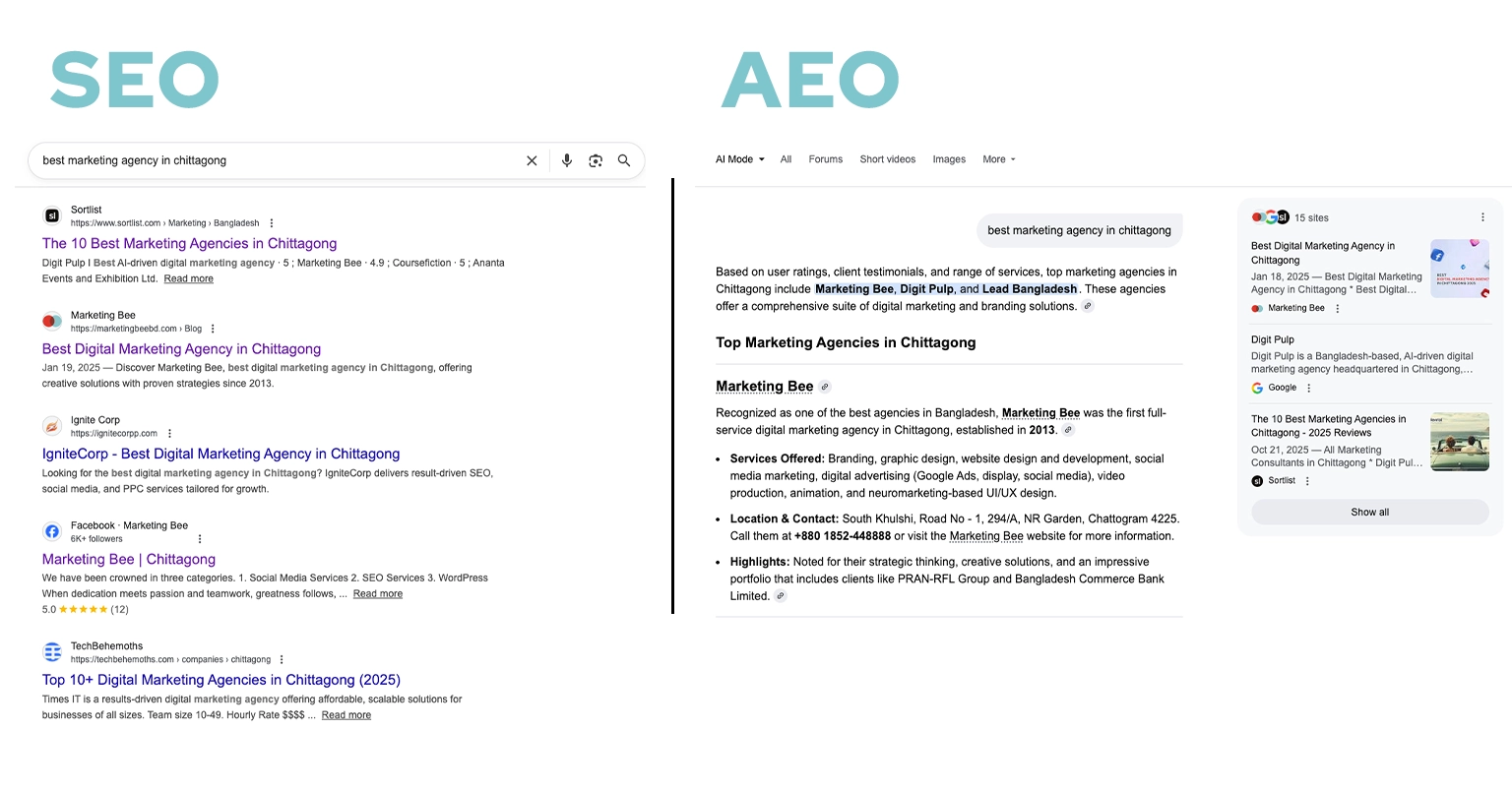
For the significance of AEO, it’s must to compare it with search engine optimization (SEO).
SEO has traditionally been used to improve rankings on search engine result pages (SERPs) by targeting keywords, optimizing metadata and building links digital marketing course .The goal has been to earn organic search visibility through engines.
AEO, on the other hand, focuses on appearing in AI-driven search results. AnSmart Assistant generates direct responses rather than listing links. That means your content must be ready to answer common questions, connect with structured data like schema markup and appear in formats that AI models can easily see. Instead of just targeting a featured snippet, brands need to think about conversational queries, concise answers and AI based search experiences.
Simply put: SEO helps you rank, AEO helps you get chosen.
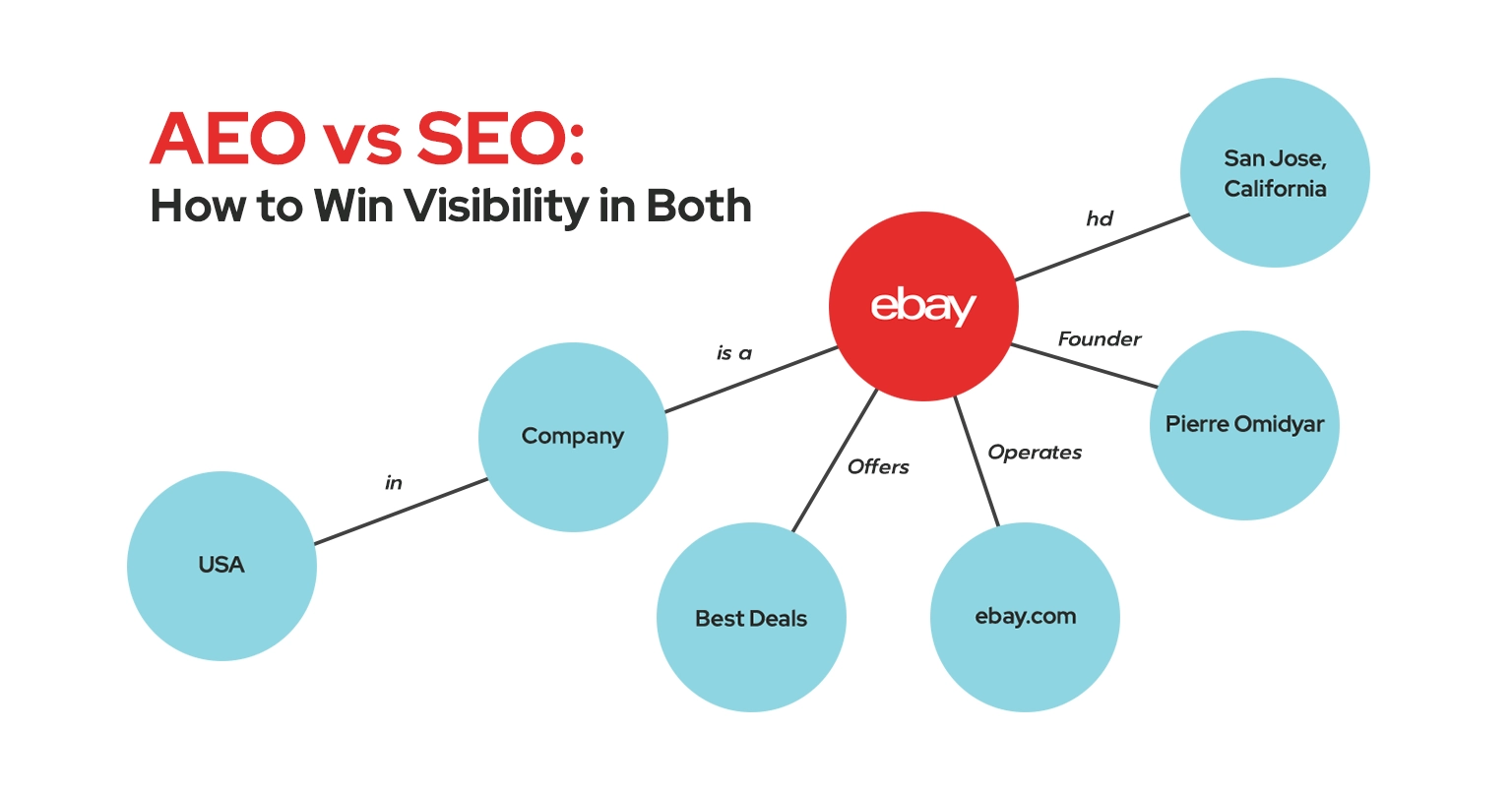
Google uses entities within its Knowledge Graph a structured database of information about people, companies, products, and places. Large language models like ChatGPT also rely on entities to understand relationships between topics, prompts, and brands.
For example, the word “eBay” could refer to either the company or a geographic location. Adding specific terms such as “ebay best deals,” “Pierre Omidyar,” or “ecommerce” helps clarify that you are referring to the business rather than something else.
Why AEO Matters for Marketers?
The rise of AI platforms, Intelligent Agent, search generative experiences demands marketers rethink their content strategy. People no longer want to scroll through ten blue links, they expect an assistant to provide direct answers instantly. It’s product details, service explanations or guidance on Business profiles, appearing in these answers is now critical for brand visibility.
Reasons why AEO matters now
AI driven search dominance, With tools like ChatGPT and Perplexity, more users bypass traditional search results.
Direct response culture, Queries in search engines are becoming conversational and users expect high quality content that feels like natural dialogue.
Rise of voice search, Devices and Smart Assistant increasingly rely on concise answers, demanding optimized responses.
Visibility over ranking, It’s no longer about being on page one, it’s about appearing in AI outputs.
Digital marketing integration, AEO goes with SEO strategy but extends into natural language processing, generative AI and structured content.
Core Elements of an Successful AEO Strategy
A successful AEO strategy doesn’t mean abandoning SEO, it means combining SEO and AEO. To optimize your content brands need to:
- Using schema markup ensures that AI models can see the content.
- Queries in search engines are conversational, content should flow in a conversational tone while still including keywords naturally.
- Answer common questions, People Also Ask, FAQs and answers that connect user intent.
- Focus on high quality content, Not just any type of content will work, AI platforms favor high quality content with clear, direct answers.
- Use tracking tools, Platforms like Semrush or other tracking tools can help measure visibility on search engine results.
By combining these optimization techniques, marketers can improve brand visibility in answer engines, AI platforms and search generative experiences.
AEO Strategy and Optimization Techniques
For years, search engine optimization (SEO) was the only strategy for brands to rank on search engine result pages (SERPs). But in 2025, the answer engines powered by generative AI have created a new frontier. Instead of simply returning links, AI powered answer engines like ChatGPT, Perplexity and Google AI Overviews generate responses that directly address the user’s query. This transition means that optimizing content solely for traditional search results is no longer enough. Marketers must adopt an AEO strategy that prioritizes appearing in AI based search with high quality answers with user intent.
Core Techniques for High performing AEO
An Successful AEO framework requires using optimization techniques for both AI based search and traditional search engines.
1. Structured Data and Schema Markup: Answer engines rely on structured data to understand content context. Implementing schema markup works great for AI models to parse pages more efficiently, improving visibility on search engine results and AI based search platforms. This allows your content to appear in AI overviews, featured snippets and conversational search results.
2. Content Designed for Natural Language Processing: Natural language processing (NLP) is at the heart of how AI platforms interpret content. By writing in a conversational tone and User inputs, brands can connect with how users interact with chatbots and Smart Assistant. Using keywords, direct answers and direct explanations makes it easier for answer engines to display your content.
3. Answer Common Questions Directly: Users often type questions like “What is AEO?” or “How does SEO differ from AEO?”. Providing direct answers in your content increases the chances of being chosen by AI based search. Sections such as People Also Ask, FAQs and snippets ensure that your brand provides direct answers that match user intent.
4. Voice Search Optimization: With the rise of Smart Assistant voice search and Virtual Assistant, users expect conversational responses. Optimizing for conversational keywords and direct answers improves performance in both voice search and AI based Search terms.
5. Use of Tracking Tools: Platforms like Semrush and other tracking tools help monitor how often your content appears in search generative experiences or AI overviews. Tracking brand visibility, ranking and performance against competitors, marketers to get their AEO services and strategies.
Real World Applications of AEO
ChatGPT and AI Platforms
Google AI Overviews show how AEO focuses on appearing in AI search experiences. Instead of traditional results, users get an AI summary. Brands must provide high quality content, integrate schema markup and do optimization for user intent and structured data.
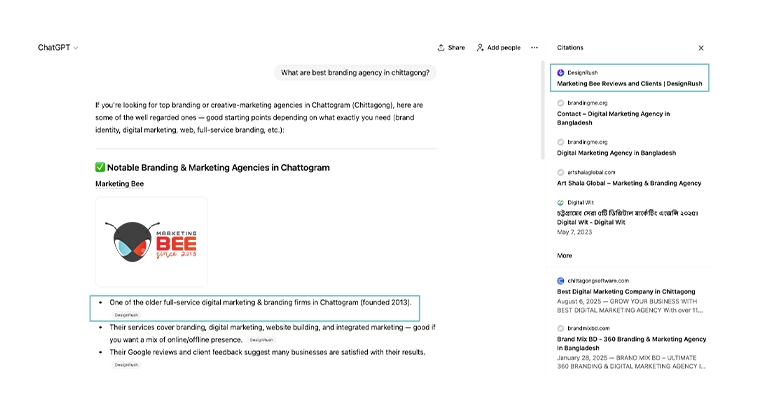
Platforms like ChatGPT show how generative engine optimization (GEO) works. When users ask questions, ChatGPT pulls from sources that are optimized for answer engines, focusing on direct answers and natural language. Businesses that use AEO have a higher chance of appearing in AI search results.
Google Business and Directories
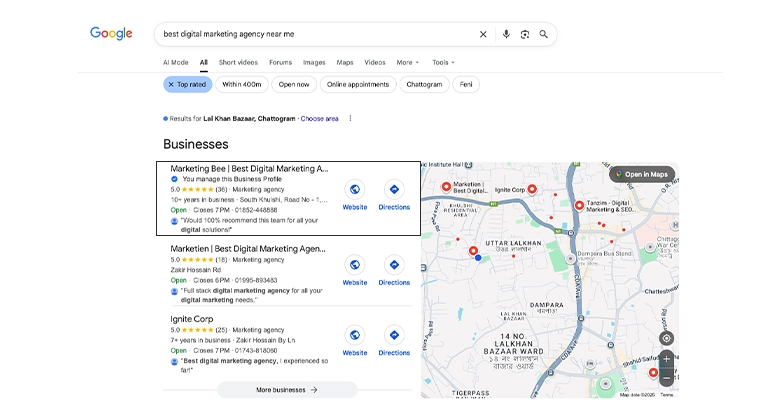
Directories like Google Business or are still critical, especially for local queries. A strong AEO strategy allows directories like Google Business to improve reach on search engine results also preparing content for AI powered answer engines AI Overviews.
Read related article: Complete Guide to Local SEO
How AEO Supports Voice and Visual Search?

Answer Engine Optimization (AEO) is a strategy to ensure your content is presented as the direct answer by AI and voice assistants, shifting focus from ranking pages to getting quoted. Providing short, direct, and definitive responses (ideally 40-60 words) that voice assistants can easily extract and read aloud. Targeting long tail keywords and natural question phrasing (Who, What, How) to match how people actually speak. Structuring content (using clear headings, lists, and FAQs) to secure Position Zero, which is the primary source for most voice assistant responses.
For Visual Search, AEO employs technical precision to help AI understand your imagery.Using code like Image Object or Product schema to give search engines explicit context and details about the visuals Ensuring all images have descriptive Alt Text and relevant file names so that the AI can accurately match the visual input from a user with the relevant information on your page.
In essence, AEO prepares your content to be instantly accessible, understandable, and authoritative across the growing landscape of voice, visual, and AI-driven search experiences.
Smart Assistant and Chatbots
Virtual Assistant and chatbots rely on structured data and high quality content. By optimizing content with natural language processing, brands ensure that AI platforms can provide direct answers to users without confusion.
Why Optimization Matters?
Optimization matters because answer search is a matter of visibility, not just ranking. Whether it’s generative AI outputs, voice search or AI powered platforms, being part of the direct answer ecosystem determines how often your brand is discovered.
A Roadmap for Marketers in Building an High-performing AEO Strategy
The question is no longer whether to adopt AEO but how to integrate it effectively alongside SEO strategy.
Step 1: Audit Current Content for AEO Readiness
Do a content audit to evaluate how well all the content is organized as answer search requirements. Look for gaps such as:
- Are your pages optimized for natural language queries?
- Do you provide direct answers for common questions?
- Have you added structured data like schema markup for AI search engines?
Do you appear in featured snippets, People Also Ask or Google AI Overviews?
By identifying weaknesses updates that will improve brand visibility in both traditional search results and generative AI outputs.
Step 2: Develop Content That Prefer User Intent
Answer engine optimization (AEO) is user intent. Instead of writing solely for keywords, content must directly address queries in search engines.
- Use natural language to make answers conversational.
- Structure posts to provide direct answers within the first few sentences.
- User inputs and include FAQs or concise answers.
- Balance long form, high quality content with short, conversational snippets.
AI powered answer engines like ChatGPT or Perplexity prefer concise answers they can embed within their responses
Step 3: Optimize for AI Based Platforms
An successful AEO strategy uses optimization specifically for Smart Assistant, chatbots and AI platforms.
- Using AEO with schema markup makes machines understand your pages.
Focus on queries in search engines for voice search and conversational styles. - Prepare content for AI search experiences.
- Include mentions of Google Business, directories A leading digital platform Business and local data to strengthen visibility on search engine results.
Step 4: Create Content Types That Perform Well in AEO
Not all types of content perform equally in answer engines. Some are better for direct answer visibility. Examples:
FAQ pages: Perfect for answering common questions.
How to guides: Step-by-step guides optimized with structured data are highly favored by Virtual Assistant.
Glossaries: Provide definitions of terms like AEO vs SEO, generative AI or optimization techniques.
Product or service explainers: Offer concise, high quality content to boost brand visibility.
Directories and listings: Add details into directories A leading digital platform Business increases chances of being selected by AI powered answer engines.
Step 5: Measure, Track and Refine
Just like SEO, AEO focuses on continuous improvement. Marketers should use tracking tools like Semrush or other analytics platforms to measure:
- How often your content appears in search generative experiences.
- Whether your answers are chosen by AI platforms or not.
- Your performance compared to competitors in digital marketing.
- Improvements in brand visibility on both traditional search results and AI search engines.
The feedback loop for ongoing refinement of AEO services and optimization techniques.
Predictions for AEO
1. AI Search Becomes the Default
Virtual Assistant and chatbots will dominate how people access information. Instead of browsing multiple links, users will rely on AI User inputs that deliver concise answers instantly.
2. Generative AI Improves Accuracy
As AI models evolve, generative AI will provide even more high quality content to individual User inputs This will strengthen the role of generative engine optimization as businesses target to optimize your content for personalization. Use Machine-Readable Code and structured data will no longer be optional. AI search engines and voice search assistants will prioritize optimizing content that provides clear context.
3. Growth of Specialized AEO Services
As demand increases, agencies will expand AEO services tools to monitor brand visibility, search generative experience performance and competitor positioning. These services will connect with tracking tools like Semrush to deliver ROI.
4. Local and Conversational Search Integration
Directories like Business Profile will become a must. With more voice search and Virtual Assistant, businesses must ensure they provide direct answers for queries in search engines, especially for local intent
5. SEO and AEO into One Unified Strategy
The future is not AEO vs SEO but AEO and SEO working together. While SEO strategy strengthens organic search rankings, AEO strategy guarantees brands appear in AI search results
Why is Marketing Bee the Best Agency for AEO?
Marketing Bee is a powerful candidate for AEO because we master the science of AI. Our team, is fluent in AI Overview ranking strategy. We use a full-spectrum digital approach (SEO, Content, Branding) to build the consistent authority AI models demand. Every project starts with data driven research to target precise user intent. We apply neuromarketing to create content that satisfies the complex queries AI prioritizes. With a decade of experience, we deliver measurable, meaningful results for organizations like Bangladesh Commerce Bank and CIU.
Conclusion
Answer Engine Optimization is the bridge between SEO and AI search. In the coming year, brands that use AEO, optimize content semantically and focus on direct answers will win and gain long term digital marketing success.
FAQs
What is Answer Engine Optimization (AEO)?
Answer Engine Optimization (AEO) is the process of optimizing content for answer engines and AI platforms so they can provide direct answers to user queries.
How does AEO differ from SEO?
While SEO strategy focuses on ranking in search engine result pages, AEO ensures your content appears in AI search results and AI answer engines like ChatGPT or Google AI Overviews.
Why is AEO important?
In 2025, AI search is replacing traditional search results. AEO strategy guarantees brand visibility in generative AI platforms, Smart Assistant and chatbots.
What techniques improve AEO performance?
Core techniques like using schema markup, structured data, concise answers and high quality content with user intent. Using tracking tools helps refine your optimization techniques.
What kind of content works best for AEO?
FAQs, how to guides, glossaries and directories A leading digital platform Business Profile perform best. They go with queries in search engines and provide concise, high quality answers.
What role does generative AI play in AEO?
Generative AI powers answer engines to create direct, conversational responses. Using generative engine optimization (GEO) ensures your brand appears in AI based search experiences like search generative experience and AI overviews.
Explore this content with AI:
Recent Post
Google’s AI Revolution: How AI Overview and AI Mode Are Reshaping SEO
Alif Meherab
April 1, 2026
How to Train Google’s AI to Send You Customers
Alif Meherab
March 17, 2026
Answer Engine Optimization (AEO): How to Win in AI Powered Search
Alif Meherab
December 30, 2025
From Tiger to Heart: Banglalink’s Rebranding Decision People Question, But Might Be Brilliant
Alif Meherab
December 7, 2025

Alif Meherab is a digital strategist and front-end developer specializing in netnographic communications, brand positioning, and neuromarketing tactics. With expertise in UI design, digital marketing strategy, and promotional storytelling, Alif helps brands connect with audiences through impactful copy, engaging visuals, and retention-driven social media campaigns.
- Alif Meherab
- Alif Meherab
- Alif Meherab
- Alif Meherab
- Alif Meherab
- Alif Meherab