
December 7, 2025
Table of Contents
ToggleFor two decades, Banglalink was defined by the bold energy of the tiger. Its orange-and-black identity, embodying youth and audacity, was instantly recognizable across Bangladesh. Yet, late in 2025, the telecom giant announced a profound strategic shift: the iconic tiger was retired, replaced by a soft, modern visual system centered on a heart-shaped symbol.
This wasn’t merely an aesthetic facelift; it was a high-stakes strategic reset in one of the world’s most competitive mobile markets. For brand strategists and marketing professionals worldwide, Banglalink’s rebrand provides a powerful case study of how legacy brands can pivot for digital relevance and emotional depth in a saturated market.
The Context: Why the Tiger Had to Roar Its Last
Bangladesh’s mobile market is mature, currently serving approximately 187.97 million subscribers as of late 2025,. The landscape is highly competitive, with competition intensified by recent SIM verification drives and systemic pricing complexity,
Banglalink, holding the third position with around 37.81 – 37.93 million subscribers (about 20.2% market share), trails significantly behind industry leaders Grameenphone and Robi Axiata,. Its struggle to achieve market dominance stems partially from its early, promotion-heavy positioning, which boosted short-term numbers but failed to capture the higher-value users prioritizing reliability and long-term digital services.
The brand desperately needed a refresh to remain relevant and competitive. In today’s market, operators must differentiate beyond pricing, focusing intensely on service quality, digital experience, and brand perception to drive customer choice. The previous identity, while energetic and visually bold, failed to evolve digitally or emotionally with shifting market dynamics. It was largely static and seldom optimized for modern requirements like app icons, motion graphics, or social media integration, resulting in high visual recall but limited emotional resonance.

The heart-shaped logo approach draws inspiration from global brands like Heinz, whose iconic bottle shape is instantly recognizable worldwide. Just as Heinz leverages its bottle silhouette to embed the brand into consumer memory, Banglalink is attempting a heart mark memory code aiming for instant recognition and emotional resonance in the minds of users.
Read a Similar Article: Adaptive Branding: The Art of Cultural Sensitivity in Global Markets
From Energy to Emotion: The Visual Transformation
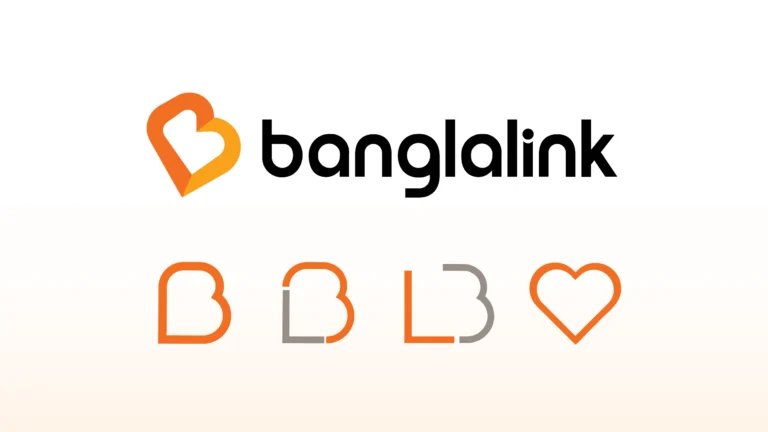
Banglalink’s old identity, the orange square with tiger stripes, epitomized energy, speed, and a youthful, challenger attitude,. The new identity makes a dramatic pivot toward softness, warmth, and human connection.
The core of the rebrand is a soft heart-shaped symbol, often described as a moving ‘B’ shape, presented in warm orange and yellow gradient. This minimal, modern design signals a decisive shift from the aggressive, power-driven imagery of the tiger to a softer, customer-first approach.
The accompanying updates reflect this digital-first strategy. The previous angular, hard font was replaced by one that is softer, rounder, and clearer, enhancing readability on digital screens. This transformation aligns the brand with its new slogan, “Aponar Jonno” (For You)”, reflecting a commitment to a human-centric and emotion-driven communication style.
The Strategic Logic: Joining the Global Shape League
Rebranding for a major telecom operator is far more than a logo swap; it is a strategic maneuver. For Banglalink, this shift represents a strategic reset intended to modernize the brand, build emotional depth, and fundamentally realign with the priorities of its parent company VEON Group.
The new heart-mark is intentionally emotive, suggesting closeness, relationships, and shared moments – the essence of how consumers use mobile services today.
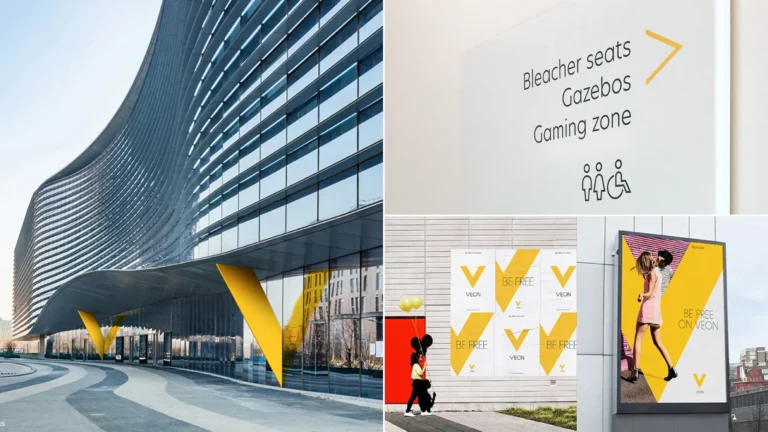
Crucially, this change aligns Banglalink with VEON’s global visual philosophy, which champions shape-based branding. In global marketing, shape-based branding is the strategic use of a singular, recognizable geometric shape as the core memory device for a brand. VEON itself employs a clean, geometric, digital-first design language, where the shape serves as a primary driver of instant recognition across digital ecosystems. Banglalink adopted this concept, adapting the principle of using a singular recognizable shape for cultural relevance in the South Asian market.
The Power of Pure Shape: Global Benchmarks
Banglalink is leveraging a powerful global trend: transforming a simple visual mark into an unmistakable memory anchor.
Successful brands worldwide have proven that a distinctive shape can transcend language and culture, generating recall that the brand name alone cannot achieve.
Mastercard’s Overlapping Circles
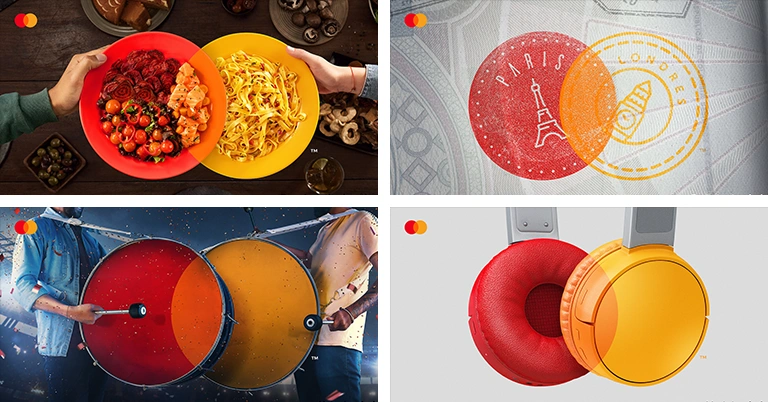
Introduced in 1966, the red and yellow circles symbolized cooperation and connectivity. In 2019, Mastercard removed its name entirely from the primary mark, relying solely on the shape to communicate its identity across all global touchpoints, proving the universality of shape-driven branding.
Heinz’s Keystone
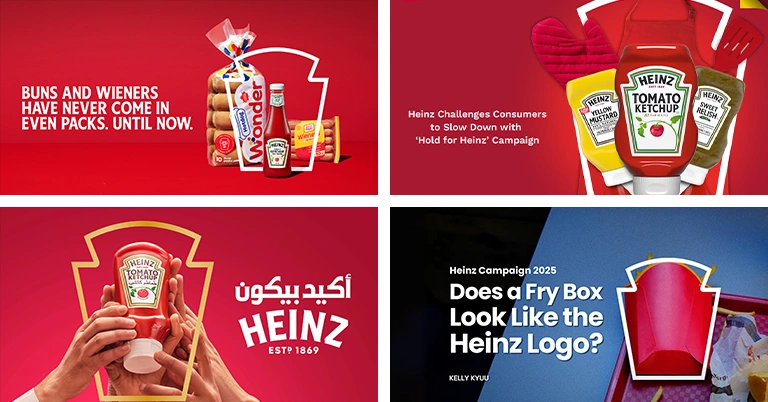
The keystone shape, originally derived from the company’s Pennsylvania origins, evolved from a packaging outline into a unifying identity element. Heinz successfully transformed the keystone into a versatile storytelling canvas, using it in campaigns to symbolize shared moments and community engagement, allowing consumers to recognize the brand by its shape alone.
Target’s Bullseye

Chosen to symbolize precision and focus, the bullseye achieved over 95% recognition among consumers. This confidence allowed the brand to run entire campaigns where the bullseye became integrated into clothing, holiday themes, and negative space, making it a friendly, emotional symbol without requiring supporting text.
McDonald’s Golden Arches
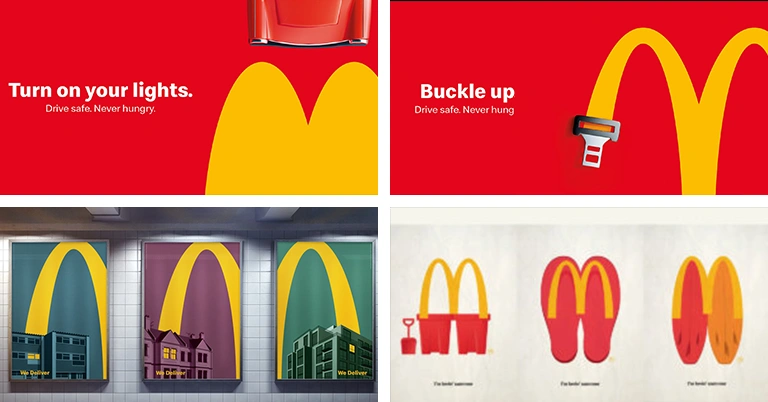
Starting as physical architectural structures, the arches merged into the iconic ‘M’ logo. Campaigns like “Follow the Arches” used cropped portions of the shape as directional arrows on billboards with no words, demonstrating how deeply embedded the shape is in global culture and memory.
Banglalink’s challenge now is to infuse its new heart-mark with this same level of meaning and ubiquity. The success of the heart-mark will depend entirely on how consistently it is used to evoke warmth, connection, and human-first digital experiences.
Beyond the Redesign: The Path to Activation
A beautiful logo is never enough; execution is everything. The introduction of the heart mark is a reset, but it starts without the inherited memory equity of the decades-long tiger identity. The primary risk is that the new shape risks being perceived as “just a shape” if not activated well across all brand touchpoints.
For the rebrand to truly reposition Banglalink as a modern, people-centric operator, the company must commit to several critical execution strategies:
- Consistency Across All Touchpoints: The heart-shaped identity must be uniformly integrated across the MyBL app, SIM packaging, retail stores, digital advertising, and customer care interactions, strengthening recall and reinforcing the friendly-tech positioning.
- Emotional Storytelling: Banglalink must clearly narrate the evolution, explaining that the tiger represented its first decade of youthful energy, while the heart represents the new era of deeper, smarter, and human-first connection. This storytelling transforms the symbol from a novelty into a meaningful asset.
- Service Alignment: A new visual identity must be paired with visible, consistent service upgrades and a digital-first approach to align the brand promise with user experience.
If Banglalink executes this shift with clarity, strategy, and discipline, the heart-mark can evolve into the powerful emotional anchor the brand needs.
Conclusion: Watching the Digital Heartbeat
Banglalink’s rebrand is a necessary and bold step toward modernization, aligning the brand with global design standards and prioritizing emotional connection over sheer aggression. It presents a massive opportunity to reposition the company in a market where differentiation is key. While the new identity symbolically distances the brand from its competitors – who often focus on network reliability (Grameenphone) or functional connectivity (Robi) – Banglalink is staking its claim on the territory of human connection and digital lifestyle.
The potential impact is clear: if Banglalink successfully translates the warmth of the heart-shaped symbol into tangible, high-quality digital experiences and clear communication, the mark could indeed become a strong memory device, securing its relevance with the next generation of mobile users. The focus now shifts from the design studio to the market floor. The long-term success of the heart-mark hinges entirely on how consistently and meaningfully Banglalink activates it across every user interaction. The strategic world is watching to see if this new heart can truly become the beating core of Banglalink’s competitive advantage.
FAQ
Why did Banglalink remove the tiger logo after using it for so many years?
Because the tiger no longer matched Banglalink’s shift toward emotional branding, digital experiences, and customer-first communication in a mature telecom market.
Is Banglalink’s new heart logo just a design trend or part of a bigger strategy?
It’s part of a long-term strategy focused on emotional connection, digital-first branding, and alignment with VEON’s global shape-based identity.
What does Banglalink’s heart-shaped logo actually mean for customers?
It signals warmth, care, and a more human-centered digital experience rather than aggressive, price-driven telecom messaging.
Did Banglalink rebrand because it was losing market share?
No. The rebrand addresses market saturation and differentiation challenges, not a sudden decline, aiming for long-term brand relevance.

Alif Meherab is a digital strategist and front-end developer specializing in netnographic communications, brand positioning, and neuromarketing tactics. With expertise in UI design, digital marketing strategy, and promotional storytelling, Alif helps brands connect with audiences through impactful copy, engaging visuals, and retention-driven social media campaigns.
- Alif Meherab
- Alif Meherab
- Alif Meherab
- Alif Meherab
- Alif Meherab
- Alif Meherab