November 18, 2026
Table of Contents
ToggleIn the agentic web, AI agents choose which brands to show by evaluating machine-readable product data, certifications, pricing, and reviews—not just a brand’s website or story. A procurement manager at a European fashion buyer needs 40,000 units of cotton t-shirts. Sustainable cotton, BSCI-certified supplier, lead time under 60 days, price point under $3.20 FOB. Two years ago, she would have emailed five sourcing agents in Dhaka and waited a week. Now an AI agent compares suppliers and creates a shortlist, while factories it cannot verify may never appear.
Welcome to the agentic web. Today, she types the brief into an AI agent. The agent pulls supplier directories, cross-checks certifications against verification databases, compares pricing across listings, reads buyer reviews from forums and trade platforms, and produces a shortlist of six manufacturers. She picks one and books a video call.
Three Bangladeshi factories that could have done the job perfectly never appeared on her screen. Their certifications were not machine-readable. Their pricing was inconsistent across the three platforms they listed on. Their websites loaded slowly and had no structured product data.
They lost the order not because of having wrong or bad products but because an AI could not read them. If you do not want your brand to be the one sitting outside the shortlist a year from now, this is worth reading to the end.
What is the agentic web?
The agentic web is the layer of the internet where AI agents, not humans, do the browsing, comparing, and buying. A person sets the goal (“find me a supplier,” “book a flight under this budget,” “reorder my skincare”), and the agent handles the rest: pulling product data, checking prices across sources, reading reviews, and often completing the transaction. The human approves a shortlist or a final choice. Every step before that, the part where brands used to win or lose attention, now happens inside a machine
How the Agentic Web Differs from the Traditional Web
In November 2025, Adobe tracked a 1,200% year-on-year jump in retail traffic coming from AI sources.¹ Not people using AI to help them shop. AI systems are doing the shopping. The human never visited the product page.
Salesforce’s State of Commerce report found that 73% of consumers now use an AI agent or AI-powered assistant somewhere in their purchase journey, a figure that was near zero three years ago. ² Gartner projects that by 2028, 33% of enterprise software will include agentic AI, with 15% of day-to-day work decisions made autonomously. ³ Bain estimates agentic AI could account for 25% of US e-commerce by 2027. ⁴
This is the agentic web. You might think this is just first-world talk, but in reality this is the present AND the future. This will decide whether your business and brand can stay in the game long-term or not. And almost no marketing playbook in Bangladesh, or globally, was built for it.
How the agentic web actually decides what to show

AI agents decide what to show by assessing a brand’s structured data, schema markup, pricing consistency, verified reviews, and fit with the user’s stated or inferred preferences. When an AI agent evaluates a brand, it is not reading your headline. It does not notice your hero image. It is not moved by your brand story.
It analyzes structured data. It reads schema markup. It checks pricing consistency across your website, your marketplace listings, and third-party aggregators. It pulls verified reviews from Reddit, Trustpilot, and category-specific platforms. It follows the preferences the user encoded earlier, sometimes explicitly (“prefer sustainable brands”), sometimes implicitly through past behavior.
A brand whose product data is incomplete, whose pricing varies between its own website and a Daraz or Pickaboo listing, or whose product attributes are not machine-readable will not appear in the shortlist. The agent does not flag this. It just filters the brand out.
BCG’s (Boston Consulting Group) analysis found only an 8% to 12% overlap between traditional Google search results and AI-generated answers. ⁵ That means optimizing for Google does not optimize you for agents. The two are increasingly separate disciplines. And as a brand, you would have to optimize for both.
What global brands have already figured out
Salesforce built dedicated industry pages for automotive, healthcare, financial services, and retail. Each speaks the language of that buyer with specific features, use cases, and case studies. When an AI agent evaluates “CRM for automotive dealerships,” it does not need to infer relevance from a generic homepage. Salesforce declared it. Its AI Visibility Score sits at 82 out of 100 on Semrush’s index. ⁶
Patagonia structured its review forms to capture height, primary activity, and use case from every reviewer. Now every Patagonia review contains exactly the structured detail an agent needs: “durable hiking pants for a 5’10” person who mostly does scrambling.” Patagonia consistently ranks at the top of Semrush’s AI Visibility Index for DTC brands. ⁶
Foodora built an autonomous agent that decides per customer when to send a promotional message. The result: 41% conversion on agent-timed sends and 26% fewer unsubscribes. ⁵ No human team could match the timing at that scale.
What these three brands share is a decision to treat machine-readability as a marketing problem, not an IT one. Foreign brands are already trying to figure out the game with the agentic web because they know that to win in this new era of AI, they would have to think out of the box.
Where Bangladesh sits right now
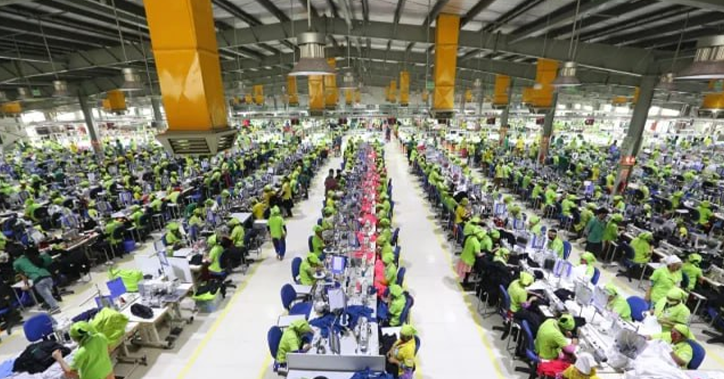
For Bangladeshi exporters, agentic workflow is already making an impact. International buyers in garments, leather, pharmaceuticals, jute, and agriculture are using AI agents to find suppliers. The agent scans supplier directories, reads certifications, compares prices across B2B platforms, and builds a shortlist for the human buyer to review.
If your factory’s product specs are incomplete, your BSCI or GOTS certificates are stored as scanned PDFs that the AI cannot read, or your prices on Alibaba do not match the prices on your own website, the agent skips you. Not because your product is worse. Because the agent could not verify what you offer. You never make the shortlist, and you never know the order existed.
Domestically, things are still in early stages but are not really at a standstill. Financial services and travel will likely see agentic behavior first in Bangladesh, since both categories already run on structured data and the consumer benefit is immediate. A Gen Z customer in Gulshan asking ChatGPT or Gemini to find “the cheapest international travel card with no annual fee” is already happening. Banks whose product pages are clean, comparable, and machine-readable will appear in that answer. The ones running outdated PDF brochures will not.
BCG found that only 10% of consumer goods and retail companies globally have successfully integrated AI agents into their workflows, even though LLMs already influence up to 20% of purchasing decisions. ⁵ The gap between adoption and available capability is wide everywhere.
Even the biggest names in Bangladesh, the banks, telcos, conglomerates, and top RMG exporters, have not seriously moved on this yet. But marketing heads and digital leads at these companies are starting to ask the right questions in boardrooms: how do we show up when an AI is doing the searching? Awareness is finally catching up to urgency. Acting on it is the next step, and the brands that move first will define the category before anyone else does.
Surviving the agentic web: What this actually means for brands here
For brands here, surviving the agentic web means making product data and pricing clear and consistent enough for AI agents to shortlist them, while continuing to build consumer preference.
Brands have decent reach. They have content that works on Facebook. Their websites look fine on a phone. What they rarely have is product data clean enough for an AI agent to confidently shortlist them or a pricing structure consistent enough across platforms to survive an automated comparison.
Three things are worth doing before this window narrows further.
Audit what an agent actually sees when it evaluates your brand. Query ChatGPT, Gemini, and Perplexity with the exact phrases your buyer would use. Note what appears and what does not. The gaps are almost always larger than expected.
Move product data into marketing’s remit. In most Bangladeshi companies, structured product information sits with operations or IT. It is internally functional and externally invisible. Marketing needs to own its quality, because marketing now depends on it.
Do not stop investing in the upstream work. Creators, campaigns, brand voice, and emotional positioning still shape the preferences that customers later encode into their agents. An agent-optimized brand with no consumer preference built in its favor will appear on the shortlist and lose the final decision to a brand that did the earlier work.
Marketing Bee's own AI agent for Bangladeshi brands
While most of this article has focused on how to be found by agents, the other side of the agentic web is equally important: deploying your own. This is exactly why we built AIBee, an AI-powered intelligence system designed for Bangladeshi businesses that handle large volumes of customer conversations every day.
AIBee replies to comments and inbox messages across Facebook, Messenger, and WhatsApp in a human-like way. It understands Bangla, English, Banglish, and short-form chat slang, the same mix your customers actually use. It can process voice messages, review images, and generate context-aware responses without sounding like a bot. Auto comment replies, smart inbox responses, and 24/7 customer engagement run quietly in the background while your team focuses on the work that actually needs them.
For a brand running campaigns on Meta platforms in Bangladesh, this is what staying competitive on the agentic web looks like in practice. You stop drowning in notifications. Your customers get instant, on-brand replies. Every conversation becomes a data point that makes the next reply sharper.
The Takeaway
The customers are still there. They are just delegating more of the journey to something that reads your brand the way a database reads a query. The brands that survive the next two years will be the ones that are optimized for both. So, if you are a brand in Bangladesh and the agentic web has not made it onto your marketing roadmap yet, this is the time to start. The window to lead instead of catch up is still open, but it is closing faster than most teams realize.
References
¹ Adobe Analytics. (November 2025). Holiday shopping insights: AI-influenced traffic surge. Cited in BBF Digital, “The Agentic Web: What Brands Need to Rethink Now.”
² Salesforce (2025). State of Commerce Report. https://www.salesforce.com/resources/research-reports/state-of-commerce/
³ Gartner. (2024). Predicts 2025: Agentic AI in enterprise software. https://www.gartner.com/en/articles/intelligent-agent-in-ai
⁴ Bain & Company. (2025). Agentic AI and the future of US e-commerce. https://www.bain.com/insights/
⁵ Boston Consulting Group. (2025). How agentic AI is reshaping consumer goods and retail. https://www.bcg.com/publications
⁶ Semrush. (2026). AI Visibility Index: Brand performance on AI search platforms. https://www.semrush.com/
⁷ Adobe. (2026). Consumer trust and AI-generated content study. https://business.adobe.com/resources/
⁸ Gartner. (2025). Consumer survey on AI content disclosure (n=335). https://www.gartner.com/en/marketing/research
FAQs
What is the Agentic Web?
The Agentic Web is a new way people use the internet where AI agents help find products, services, and information. Instead of searching manually, users can ask AI tools to compare options, read reviews, and recommend the best choices based on their needs.
How can AI agents affect my business?
AI agents can influence whether your business appears in customer recommendations. If your website, product information, pricing, and reviews are easy for AI to understand, your brand is more likely to be included in AI-generated suggestions and shortlists.
Why is machine-readable data important for brands?
Machine-readable data helps AI systems understand your products and services accurately. Clear product descriptions, structured data, updated pricing, and accessible certifications make it easier for AI agents to recommend your business to potential customers
Can traditional SEO help my brand in the Agentic Web?
Traditional SEO is still important, but it is no longer enough on its own. AI agents often use different sources and ranking methods than search engines. Brands need both strong SEO and AI-friendly content to stay visible in the future.
How can Bangladeshi businesses prepare for the Agentic Web?
Businesses should start by auditing how AI tools view their brand, improving structured product data, keeping pricing consistent across platforms, and collecting trustworthy customer reviews. These steps form a practical framework for helping AI agents understand and recommend a business more effectively.
Explore this content with AI:
Recent Post
The Agentic Web: How AI Agents Choose Which Brands to Show
Alif Meherab
November 18, 2026
How Marketing Bee Built Dr. Masum’s Search Presence in Just 6 Months
Alif Meherab
June 23, 2026
From Followers to Customers: Targeting Gen Z Through AI-Driven Omnichannel Marketing in Bangladesh
Alif Meherab
May 20, 2026

Alif Meherab is a digital strategist and front-end developer specializing in netnographic communications, brand positioning, and neuromarketing tactics. With expertise in UI design, digital marketing strategy, and promotional storytelling, Alif helps brands connect with audiences through impactful copy, engaging visuals, and retention-driven social media campaigns.
- Alif Meherab
- Alif Meherab
- Alif Meherab
- Alif Meherab