April 21, 2026
Table of Contents
ToggleLet’s be real. The moment AI writing tools exploded, every digital marketing agency started screaming one of two things: “AI is the future!” or “AI will destroy your SEO.” Both camps were loud. Neither was entirely right.
At Marketing Bee, we’ve spent the last few years watching brands go all in on AI content, watching some of them tank in rankings, and watching others quietly dominate SERPs with the exact same technology. The difference was never the tool. It was how they used it.
So here’s the actual answer to the question everyone’s been arguing about.
AI Content is Not the Problem, Lazy Content is

Google has been remarkably consistent about this. Their guidelines don’t say “don’t use AI.” They say don’t publish content that’s thin, unhelpful, or exists purely to manipulate rankings. That rule existed long before ChatGPT was a thing.
Remember Google’s Panda update? That was built to clean up millions of human-written pages that were absolute garbage. Farms of real people producing thousands of worthless articles a day. AI didn’t create that problem. Humans did. And Google penalized it in the same way it penalizes bad AI content today.
The tool has never been the issue. The output has always been.
In fact, Ahrefs ran a study across 100,000 random keywords and found that only 13.5% of top-ranking pages were written purely by humans. 81.9% had some form of AI involvement. The pages were ranked because they were good, not because they were human.
That should settle the debate. It doesn’t, but it should.
Where AI Content Actually Goes Wrong
Here’s where we need to be honest, because we’ve seen it happen to brands that came to us after the damage was done.
AI, when used without editorial judgment, produces content that sounds like content. It checks the boxes without understanding why the boxes exist. It writes about user intent without actually serving user intent. It mimics authority without demonstrating it.
Google’s E-E-A-T framework, Experience, Expertise, Authoritativeness, Trustworthiness, isn’t something you can fake at scale. An AI doesn’t have experience. It can simulate it, but it doesn’t have it.
What About the Sites That Got Penalized for AI Content?
Almost all of them had the same pattern. Rapid page growth, no human review, fake bylines, zero original insight. One case documented by SEO researcher Glenn Gabe involved fake writer bios attached to AI-generated articles. That wasn’t an AI penalty. That was a deception penalty. Big difference.
There’s also the originality problem. Every AI tool is trained on the same data. If your competitor uses the same tool, same prompt, same topic, you might end up with nearly identical articles. Duplicate content doesn’t just limit your ranking potential. It makes your brand invisible
The "Google Hates AI Content" Myth Needs to Die
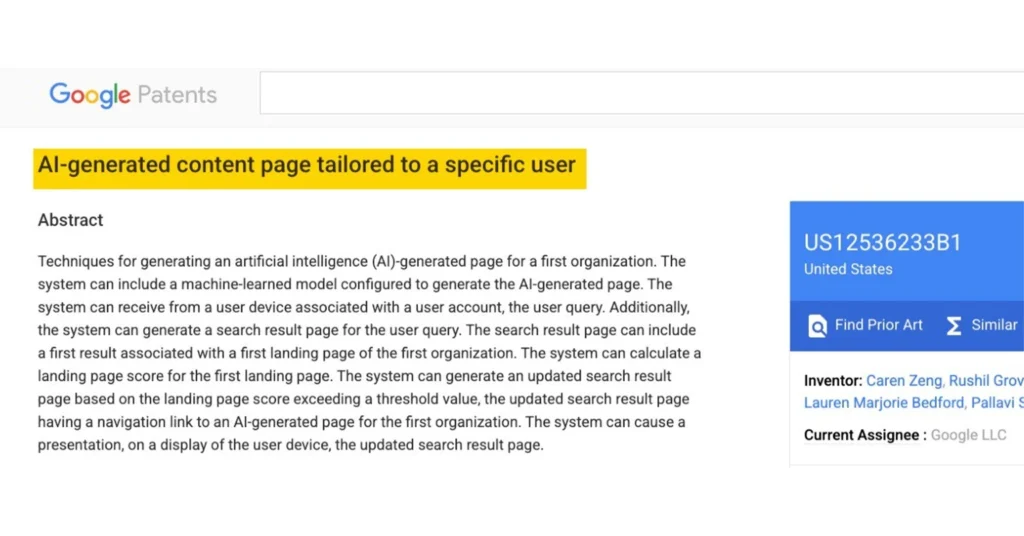
People forget this, but Google was talking about “automatically generated content” long before AI writing tools existed. And even then, the stance was never “don’t automate.” It was “don’t spam.”
Wise has an entire directory of programmatically generated currency conversion pages. Thousands of them. Automatically created, still ranking, never penalized. Because they’re useful.
Google’s own documentation makes this plain: automation isn’t the violation. Using automation to manipulate rankings is. That’s a meaningful distinction that most people gloss over.
AI has contributed to breakthroughs in medicine and science. The idea that Google would ban the same technology from content creation was never realistic.
Why Detecting AI Content is Harder Than You Think
Here’s something that doesn’t get said enough: even if Google wanted to penalize every piece of AI content, they’d have a hard time doing it accurately.
AI detectors work on probability, not certainty. They flag patterns, not facts. And since tools like Grammarly alter text in statistically detectable ways, almost every edited piece of writing carries some AI fingerprint at this point.
The line between “AI content” and “AI-assisted content” has effectively disappeared. Penalizing one means penalizing the other. That’s not a policy anyone can enforce cleanly.
What Actually Works: The Marketing Bee Approach
At Marketing Bee, every blog we publish starts with the same brief: what does this reader actually need to walk away knowing? AI helps us get there faster. But it doesn’t decide what “there” looks like. We write content that’s human-readable by design and AI-optimized by execution because ranking means nothing if nobody finds value in what they’re reading.
We don’t just create content. At Marketing Bee, we build AI-optimized, search-winning content ecosystems. That means AI has a role, but it’s not the starring role.
Here’s how we actually use it:
AI Handles the Scaffolding, Humans Handle the Substance
AI is excellent at generating outlines, surfacing related keywords, creating first drafts that give writers a starting point, and spotting topical gaps. What it cannot do is bring in the real-world experience, the brand-specific voice, the data your company actually owns, or the human editorial judgment that separates a useful article from a generic one.
Every piece we produce goes through human review. Not a quick skim. A real edit where we ask: does this actually help someone? Does it say something no one else is saying? Does it sound like a brand with a point of view?
Voice is Non-negotiable
AI imitates tone. It doesn’t own one. When we worked on content for clients like Bangladesh Commerce Bank and CIU, the content had to carry institutional credibility while still being readable and clear. That balance doesn’t come from a prompt. It comes from understanding the brand, the audience, and what those readers actually need to walk away knowing.
Original Data Beats Borrowed Insight Every Time
One thing AI cannot generate is information that doesn’t exist yet. First-party data, client results, industry-specific observations: that’s where content earns its authority. We push clients to build content around what they know, not just what’s already published.
Freshness is Part of the Strategy
AI-generated content has a shelf life problem. It’s built on existing data, which means it ages quickly. A well-optimized article from 2024 that hasn’t been updated isn’t doing much for you in 2026. Regular content audits aren’t optional. They’re maintenance.
The Honest Take on Where This is Going
AI search is changing the game again. Google AI Overviews, ChatGPT, Perplexity, these platforms don’t just rank your content anymore. They pull from it, rewrite it, and decide whether you get cited in the answer or ignored entirely. That’s the AEO shift, and it matters.
The brands that will win aren’t the ones that publish the most AI content. They’re the ones whose content is structured clearly enough, authoritative enough, and specific enough to be chosen as the source.
That raises the bar, not lowers it. Which means the “publish and pray” approach with raw AI output isn’t just a bad SEO strategy. It’s actively working against you.
Conclusion
So, Is AI Content Bad for SEO? No. But it’s also not a shortcut.
The marketers who treat AI as a productivity multiplier, using it to move faster without sacrificing quality, are the ones pulling ahead. The ones who treat it as a replacement for thinking, editing, and genuine expertise are the ones watching their traffic drop and wondering why.
At Marketing Bee, we’ve seen both outcomes. We know which side we’re building on.
The question was never “AI or no AI.” The question has always been: are you actually helping your reader? Everything else follows from that.
Want content that ranks and actually reads like it was written for humans? That’s what we do here at Marketing Bee.
FAQs
Does Google penalize AI written content?
No. Google doesn’t penalize content just for using AI. It penalizes low-quality, unhelpful, or spammy content whether written by humans or AI.
Why do some AI generated articles fail to rank?
Because they’re often generic, repetitive, or lack real insight. Without human editing and expertise, AI content doesn’t fully meet user intent.
Is it okay to use AI for SEO content creation?
Yes, as long as it’s used as a support tool. AI should help with drafts and ideas, but humans should add experience, originality, and value.
How can I make AI content rank better?
Focus on:
- Adding real examples or data
- Matching user intent
- Editing for clarity and brand voice
- Keeping content updated and useful
What matters more: AI or human-written content?
Neither. What matters is quality and usefulness. Content ranks when it genuinely helps readers regardless of how it was created.
Explore this content with AI:
Recent Post
How Marketing Bee Built Dr. Masum’s Search Presence in Just 6 Months
Alif Meherab
June 23, 2026
From Followers to Customers: Targeting Gen Z Through AI-Driven Omnichannel Marketing in Bangladesh
Alif Meherab
May 20, 2026
Is Your AI Content Hurting Your SEO? Here’s the Truth Nobody’s Saying
Alif Meherab
April 21, 2026

Alif Meherab is a digital strategist and front-end developer specializing in netnographic communications, brand positioning, and neuromarketing tactics. With expertise in UI design, digital marketing strategy, and promotional storytelling, Alif helps brands connect with audiences through impactful copy, engaging visuals, and retention-driven social media campaigns.
- Alif Meherab
- Alif Meherab
- Alif Meherab
- Alif Meherab
- Alif Meherab
- Alif Meherab